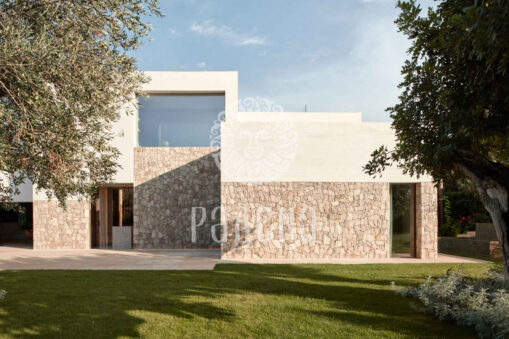
Tumbling of natural stone is a technological process of working stone in order to get polished surface and rounded edges. One understands the tumbled stone as plates of all possible dimensions, irregular shape with smooth streamlined faces.
The essence of tumbling process is that metal balls and products to be cleaned and polished are constantly moving in a rotating cylinder causing friction through which all the roughness is smoothed and the product is cleaned from dirt and dust.
Production of tumbled stone
Tumbling cylinder is a hollow cylinder with textured jagged walls. Stones are placed in the drum-type mechanism; the cylinder rotates with certain speed; stones are rubbing against each other; their sharp edges smooth; faces get rounded and the surface becomes almost smooth.
The main advantage of tumbling process is the possibility of working stones of any sizes from small pebbles to massive rocks of highly durable granite. Precious minerals receive beautiful veins during such processing and the surface can become almost specular but at the same time save its rough texture which won’t be slippery in wet weather.
Using tumbled stone in construction
• Walls and basement. Tumbled stone is perfect for constructing and decorating basement, walls and fence. The stonework of semi-circular plates refers to ancient Irish or Scandinavian architectural traditions because it was these people who actively used for construction large river pebbles that can be called naturally tumbled stone.
• Fireplaces. Some kinds of polished stone are perfect for decoration or even constructing a fireplace. Such construction will perfectly mirror the image of stove which was used by the inhabitants of mountain areas.
• Entry groups and hardscape elements. These are arches above the gate and by entrance, pillars and stone compositions for fountains.
• Pavements and garden paths. Thanks to high decorative qualities polished plates are widely used in road construction. Or rather the construction of pedestrian infrastructure like driveways and paved walkways.
• Landscape design. The pond finished with tumbled stone looks well-kept and esthetic. Processed plates are perfect for the alpine slides. If you need to build a platform for summer café or arrange some recreation area, the tumbled stone plates will be very useful.
Tumbling simulates the long-term impact of water on stone. The surface becomes slick and velvety with smoothed edges of relief. Tumbling tones down the color of stone so that it leaves an impression of aged stone. There are chemical impregnation reagents which show the real color; they allow creating an inimitable view of aged stone with wet effect.
Special value and grace of stones processed in such way gives a bizarre pattern that looks even more interesting and unusual after polishing.