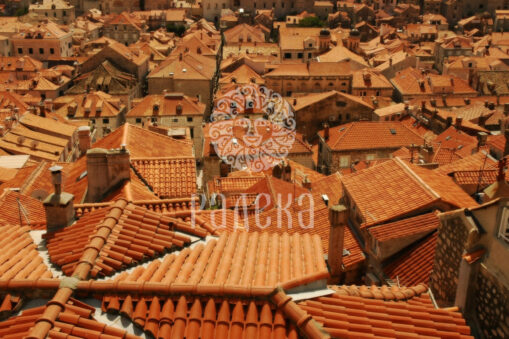
Nowadays ceramic and sand-cement tiles is one of the most enduring and expensive roofing materials. Despite the apparent similarity these roofing materials are produced using different technologies and from different raw materials.
Ceramic tiles production technology
Raw material for ceramic tiles serves pottery clay which is mixed with water and plasticizer. The resulting clay mass is compressed and squeezed onto the conveyor like a clay tape that is cut afterwards to the platters of certain size and pressed in special press-forms. After that molded clay platters are dried in chambers under continuous monitoring of humidity and temperature and then directed to baking.
Ceramic tiles is subjected to engobing or glazing; if the final color is supposed to be red then these kinds of processing are not carried out. Tiles of red color is called natural due to the iron oxides contained in clay.
Engobe is white clay mixed with water and different mineral pigments added; or any colored clay is applied to the tiles surface and give it certain color. The surface of engobed tiles does not crack in use during time.
Glazing means coating of tiles with powder material; after baking it gives the surface of roofing material a distinctive vitreous luster. The color of glazed tiles depends on iron ions contained in the glaze. Glazing defends tiles from humidity; while raining water washes all the dirt off tiles bringing it natural luster back.
Ceramic tiles come through three stages of baking in tunnel kilns:
warming up to 120°С, at this time the physically bound moisture is removed from wet platters; their material is losing plasticity;
baking with gradual rise of temperature till 1000°С. 450-600°С – evaporation of chemically bound moisture; clay minerals are destroyed and the tiles is getting original toughness; combustion of organic impurities. 800°С – surface solidity of ceramic platters is increasing. 1000°С – fusible minerals and compounds begin to melt enveloping and tighten infusible parts together that leads to the contraction and compaction of ceramic tiles.
gradual chilling of ceramic tiles after which this roofing material becomes durable and water resistant.
Finished natural tiles are marked and delivered to warehouses of finished products. The main criteria of quality the ceramic tiles is the absence of any visual defects and the presence of sonorous and clear sound when knocking with a metal thing.
Sand-cement tiles production technology
Sand-cement tiles are produced of Portland cement, silica sand, water and pigments based on iron oxide. Dosed portions of sand and pigment are gradually put into the mixer; after mixing them Portland cement and water are added to the mixture. The resulting mixture is following as a continuous tape and then cut to platters or sent to the press forming curved shapes.
Next the tape of a conveyor delivers formed tiles to the coloring chamber where a layer of acrylic paint is applied to the sand-cement tiles. One day after initial solidification in the drying chamber the sand-cement tiles is sent again to the second coloring and drying, then it’s marked and delivered to the warehouse where it has been staying for 28 days to get solid.
Characteristics of ceramic and sand-cement tiles
Natural tiles have got really outstanding characteristics – 100 years of operation in case of partial restoration after every winter season; it’s normal for it.
Advantages of natural tiles
• It doesn’t emit any chemicals and has no smell
• It doesn’t accumulate static electricity
• Resistant to chemical and biological effects and ultraviolet exposure
• It doesn’t require painting throughout the whole lifetime service
• Fire resistance, heat and cold resistance, water resistance
• High sound insulation qualities
• Due to considerable weight there is a complete lack of windage.
Pros of ceramic and sand-cement tiles mainly depend on the compliance with production technology and professional skills while laying the material on the roof.
Disadvantages of natural tiles
• High price
• It requires a large angle slope
• Considerable weight
• Fragility
Component accessories for natural tiles
Additional component accessories in case of ceramic and sand-cement tiles are usually produced from the same material as the ordinary tiles. There are ridge tiles, base tiles, starting tiles, hip tiles, margin tiles, half tiles. Also there are a number of metal component accessories. For example the joints are made with the help of special tapes (aluminum, lead, copper) and clutching bars (aluminum, copper); steel or aluminum grooves are provided for the valley.
For providing ventilation of under-roof space in a ridge zone they use platter-shaped air-elements from PVC, copper or lead. For the slope they use special venting tiles and for the roof sinking – chimney or antenna – passing tiles are used. Also the elements of snow retention are offered such as metal grids, pipes, logs or hooks.
High-quality installed roof from ceramic or sand-cement tiles can serve for about 100 years in case all necessary elements and a safety system are provided and the maintenance and replacement of cracked tiles is carried out annually.