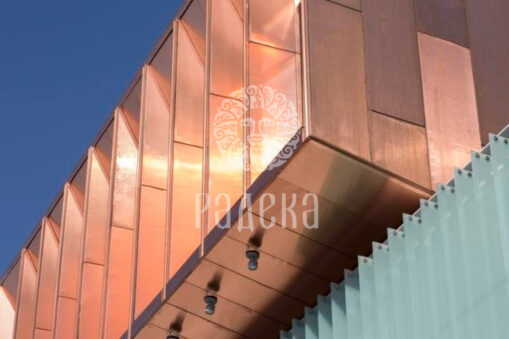
Copper is a ductile transition metal of golden-pink color. In the air a copper surface is quickly covered with a layer of oxide which gives it typical intensive brown and then black color. Afterwards the layer of oxide changes gradually turning into patina having a greenish-blue color.
Copper is a living material which is naturally and harmoniously blend in with Russian nature and combines with urban architecture. Application of a copper sheet in construction is based on century-old traditions which date back to 1280 as historians say. In Russia from time immemorial the domes of Orthodox churches have been covered for a fill due exclusively with copper and gold. And even today somewhere in Russia there are still ancient estates of the Russian nobility under a genteel patina of a copper roof having survived more than one generation of its owners. Copper roofs of Kazan Cathedral, St. Isaac’s Cathedral, the fortress of Peter and Paul and other historic buildings of Saint Petersburg define a peculiar appearance of Russian northern capital.
Scopes of application of copper sheet and tape
Roofing. A copper roof is one of the most prestigious and expensive kinds of a roof covering which is applied when constructing private buildings of business and premium class.
Facades. A facade of copper is always bright, individual and longevous. Facing of the facade part of the building is quite a bold design solution and is also a serious indicator of the owner’s status.
Interiors. Elements of copper and brass in the interior of a flat, a house or a public building look sonorous and noble and fill with the sense of reliability, stability and well-being.
Advantages of copper sheet
• Durability – copper is rather strong material not requiring any additional processing or cleaning, also copper is not afraid of any weather conditions. All this is presented to copper by natural patina protecting copper from corrosion;
• Long service life – copper has an amazing resistance to chemical exposures; it has already been proved that copper covering has been serving for 100-150 years;
• Ecological compatibility – copper is a natural material which has always been used for finishing the buildings, making tools and dishes and also jewellery because it is absolutely harmless to health and the environment;
• Pliability in processing – due to its plasticity copper is easy to bend and stretch;
• Economy – if copper on the roof or facade of the building was properly installed, then in future it will not require any care or renovation. Besides copper is not exposed to deep corrosion and it doesn’t need to be painted.
Kinds of copper
Classic copper. The surface of classic copper glitters and has a reddish-golden color. The original color of copper persists not so long; during the first 60-90 days the surface of a tape is dimming and beginning to get dark and then is being covered with malachite green patina.
Oxidized copper. This copper has got a brown colored surface having avoided glittering stage and the following irregular aging to the oxide level. But you must remember that oxidized copper still continues to age and eventually covers with patina.
Patinated copper. Copper of green color covered with patina that is factory fabricated. Purchasing patinated copper for a building of your house you invest a pretty big sum of money in construction but at the same time in future the color of a copper surface will change insignificantly.
Tinned copper. It’s a copper sheet covered with a layer of tin and having warm matte-gray color of the surface. Over time the color of tinned copper changes a little and becomes gray-green. It’s happening because a copper sheet is getting green under the layer of tin.
Bronze. Alloy of copper and tin of reddish-brown color was developed especially for designers. During operation bronze copper is getting brownish-green shade which then transforms to dark brown-anthracite.
Brass. Alloy of copper and zinc was developed especially for covering facades of the houses. Time and weather naturally change the original reddish-golden color of brass firstly into greenish-brown and then into grayish-brown color. The end of the process of aging copper to brass is a dark-brown anthracite shade.
Golden copper. Alloy of copper and aluminum has got a golden color and is an excellent alternative to braid gold and titanium nitride applied to producing and installation roofing of churches and temples. Over time the original golden-green color of the surface of copper gets a matte-golden shade and remains the same forever.
Remember that different kinds of copper may be combined between each other creating truly interesting and unique surfaces of the roofs, facades and interior solutions.
In our time copper is at the peak of fashion. It is popular among wealthy people appreciating respectability and style and also being able to invest profitably because using of copper tape as a building material not only decorates a real estate object but also increases its status and a cost.