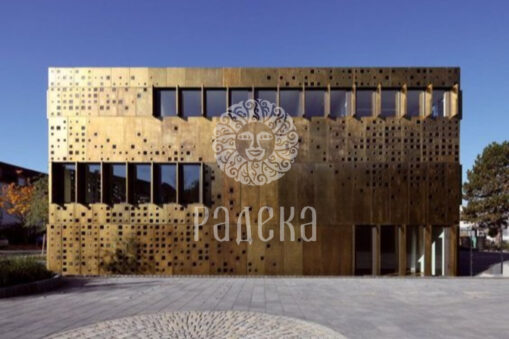
Brass is an alloy of copper and zinc known from ancient times; they learnt to produce it in Ancient Rome. A content of zinc in the alloy can be from 5 to 45 percent. Zinc is cheaper than copper that’s why its introduction into the alloy not only improves mechanical, antifrictional and technological features but also decreasing the cost of brass.
History of brass
Brass may be named the most outlandish alloy of ancientry. In the Roman Empire a production of the alloy began in I century B.C. Among precious metals brass was ranking third after silver and gold. In the East the alloy was known since VIII century. There is data about using the brass alloys in VIII-IX centuries in the north-western Caucasus. Along the Silk Road inhabitants of the Northern Caucasus could buy brass from Asia Minor.
Advantages of brass
Any metal has certain characteristics which can be either advantages or disadvantages in different situations. Brass is rather frequently applied to construction works that testifies to the growing popularity of this fine material.
• Low weight. This quality is successfully used when installing brass facades and roofs.
• Decorative qualities. Brass has got a very beautiful and various color scale. Décor, wall panels, furniture elements made of brass are permanently attractive and underline the elegance and a discreet luxury of the interior. Moreover the alloy looks equally good as a shiny product in Baroque or with a genteel patina;
• Low thermal conductivity. This feature is used for making things and systems that are important to be kept warm – when making luxurious brass baths or even furniture because pipes and brass inserts won’t be so unpleasantly cold to the touch like steel ones for example;
• Resistance to corrosion. Brass is a longevous metal so it is applied in the construction of iconic objects and buildings;
• Low price. Brass is not less attractive but much cheaper than copper because zinc is a metal that is much more available and decreases the cost of the alloy;
• Ecological compatibility. Brass is absolutely safe for using in exterior and interior;
• Longevity and durability. Brass combines functionality, a unique durability and resistance to humid and wind and also external qualities that will make any architectural design unrepeatable.
Brass gives a unique view to the building but it is also in harmony with the urban landscape. Due to reflective qualities it harmoniously blends in with public lighting and natural light.
Colors of brass
Classic yellow color of brass is exposed to sharp change under the influence of the atmosphere. Initial weathering changes original golden color of brass from fulvous to purple. With further weathering fulvous colors become dominant. On sloping surfaces brass takes a typical of copper patina layer which has been developing gradually for many years.
With special processing one may get a brass tape of sheet of brown color. In future the surface of oxidized brass will continue changing like a surface of classic brass. Brass has an excellent resistance to mechanical abrasion and corrosion and also has an exceptional durability.
Processing and installation of brass
Brass is good at soldering by both hard brazing and with the help of inert tungsten gas. Also brass is well suitable for manufacturing large-size elements of facade and interior facing. The surface of brass sheets is usually covered with a protective film for safe transportation. The film must be removed immediately after installation.
Brass in construction
Due to the special resistance to mechanical exposure, high anticorrosion qualities, longevity and rigidity brass can acquire various forms without additional heat processing that allows realizing design of any complexity in a fairly short time. The material is perfect for curved facade or interior elements.
• Facades. Facade elements of classic and aged brass are in fashion, longevous and beautiful;
• Roofs. Panels, single tiles and accessories of brass will easily complement most architectural styles;
• Parapet drip molds. Brass drip molds perfectly combine with wood, stone, ceramic and other finishing materials;
• Friezes. Brass horizontal and vertical friezes will underline the elegance of the building and shades laconic architectural forms;
• Wall panels. Brass panels with perforation and accent lighting or without it are perfect for accent finishing of interiors;
• Fireplaces and furniture. Brass is successfully used in manufacturing of furniture and fireplaces, perfectly combined with stone and wood.
Durability, practicality and high quality of brass provide great opportunities for interior design and also for architecture of facade exterior. Bright natural surface of brass gives originality to any construction. Brass interiors, roofs and facades under the exposure to time and the environment change their qualities and color getting stronger and brighter.